
What slating work involves
Slate is one of the longest-lasting roof coverings there is, but it relies on every slate being properly fixed and overlapped. Slating work ranges from replacing a handful of slipped or broken slates to stripping a roof and re-slating it completely in natural or man-made slate.
On a new slate roof the battens are set out carefully so the gauge and laps are consistent, each slate is securely fixed, and the ridge, hips and verges are finished to match. Individual repairs mean easing out the broken slate, fitting a matching replacement and fixing it so it sits flush with its neighbours.
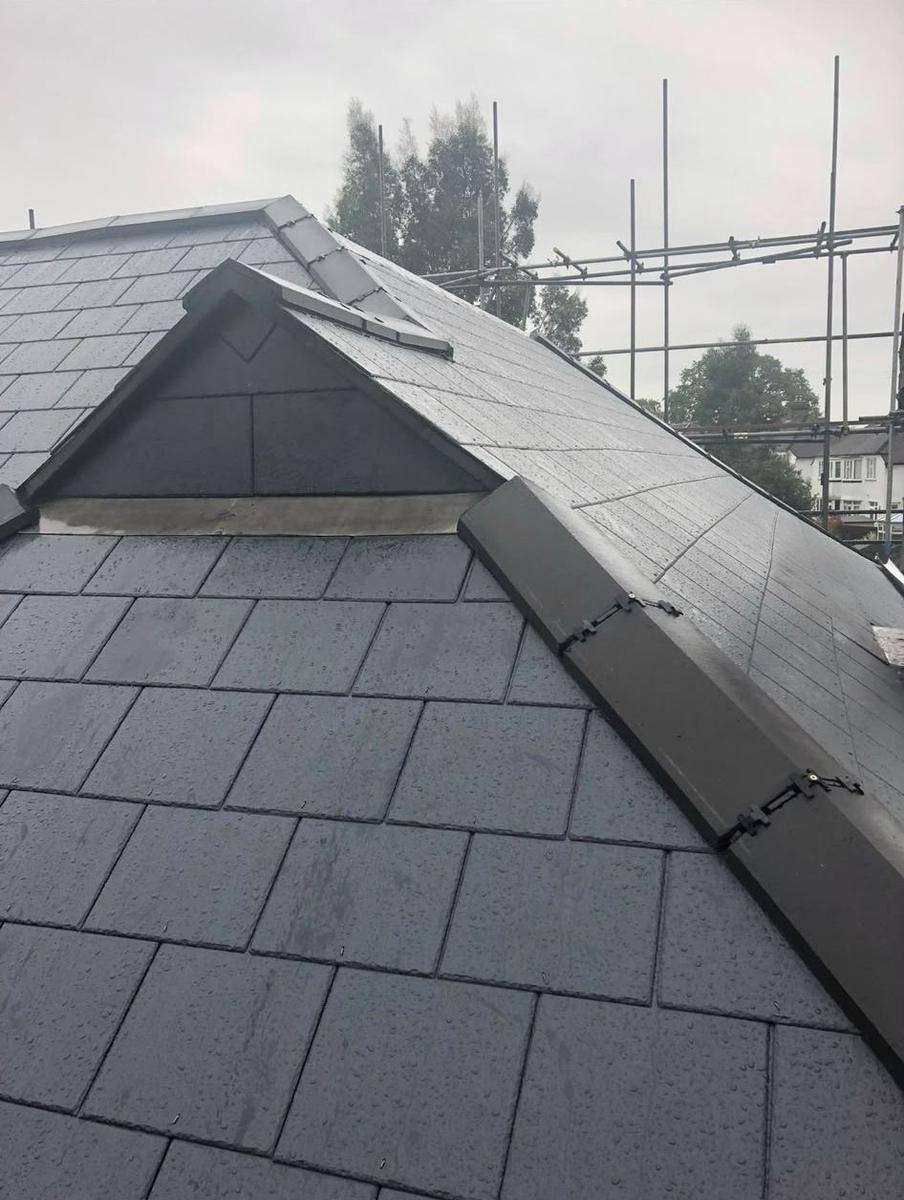
Signs your slate roof needs attention
- Slates on the ground, in the gutter or visibly out of line on the roof
- Several slates slipping at once, which often means the nails have corroded (“nail sickness”)
- Cracked, flaking or crumbling slates
- Lots of old metal strips holding slates in place from previous repairs
- Damp patches on top-floor ceilings after heavy rain
- Loose ridge tiles or crumbling mortar along the ridge
How Ben approaches it
Most of the time, slipped slates can simply be refixed or replaced with a matching slate. There is no need for a whole new roof. Where large numbers of slates are failing because the fixings have given up, it is worth an honest conversation about re-slating rather than paying for repeated repairs.
Ben will tell you which applies to your roof, show you photos of what he has found and price the option you choose. On a full re-slate he can talk you through natural and man-made slate so you can weigh up appearance and budget, and the battens, membrane and lead work underneath are put right at the same time. See also new roofs and lead work.