What a new flat roof involves
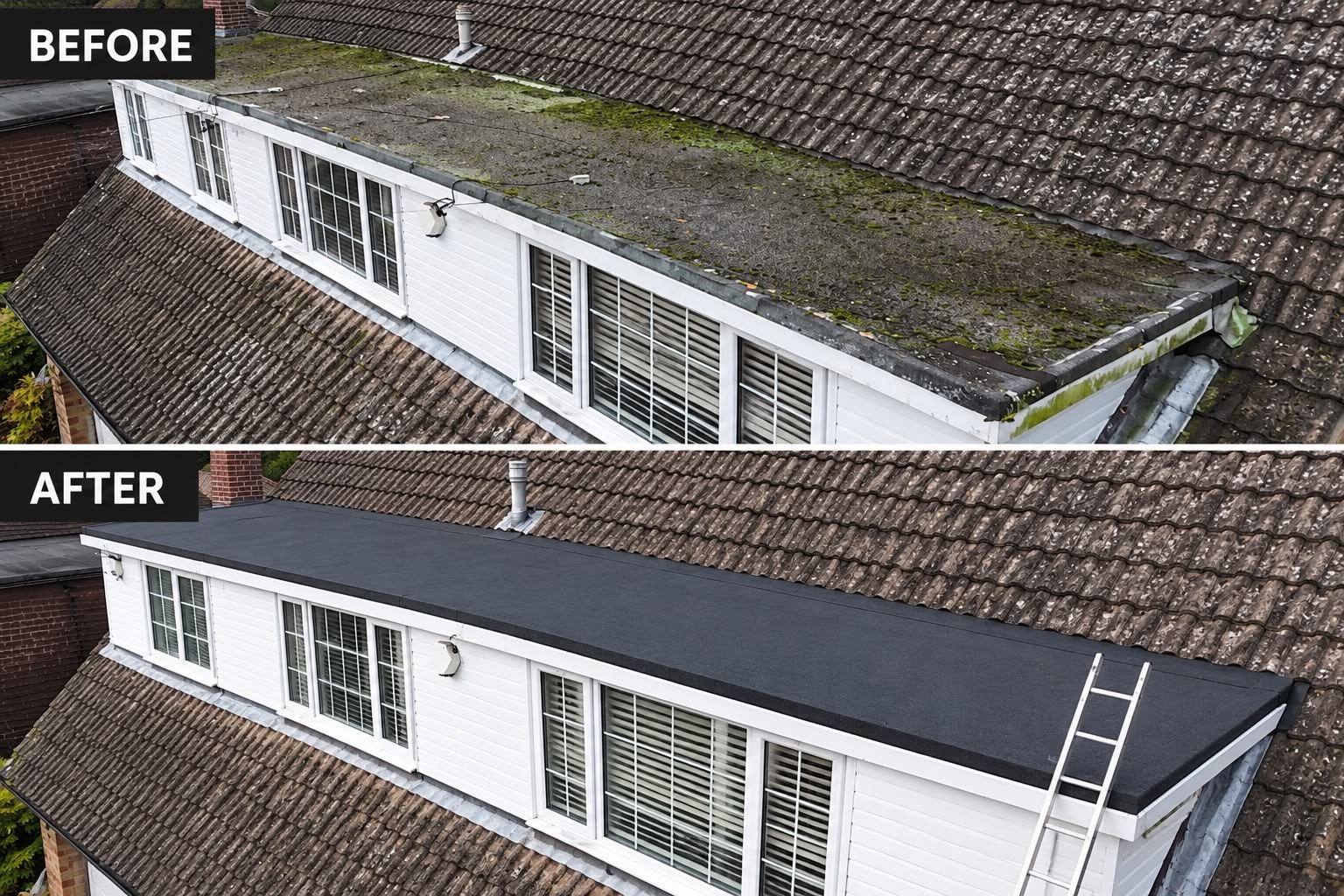
Flat roofs cover extensions, garages, dormers and bay windows, and despite the name they are built with a slight fall so water drains away. Replacing one usually means stripping the old covering, checking the deck boards underneath and replacing any that have gone soft, then laying a new waterproof system.
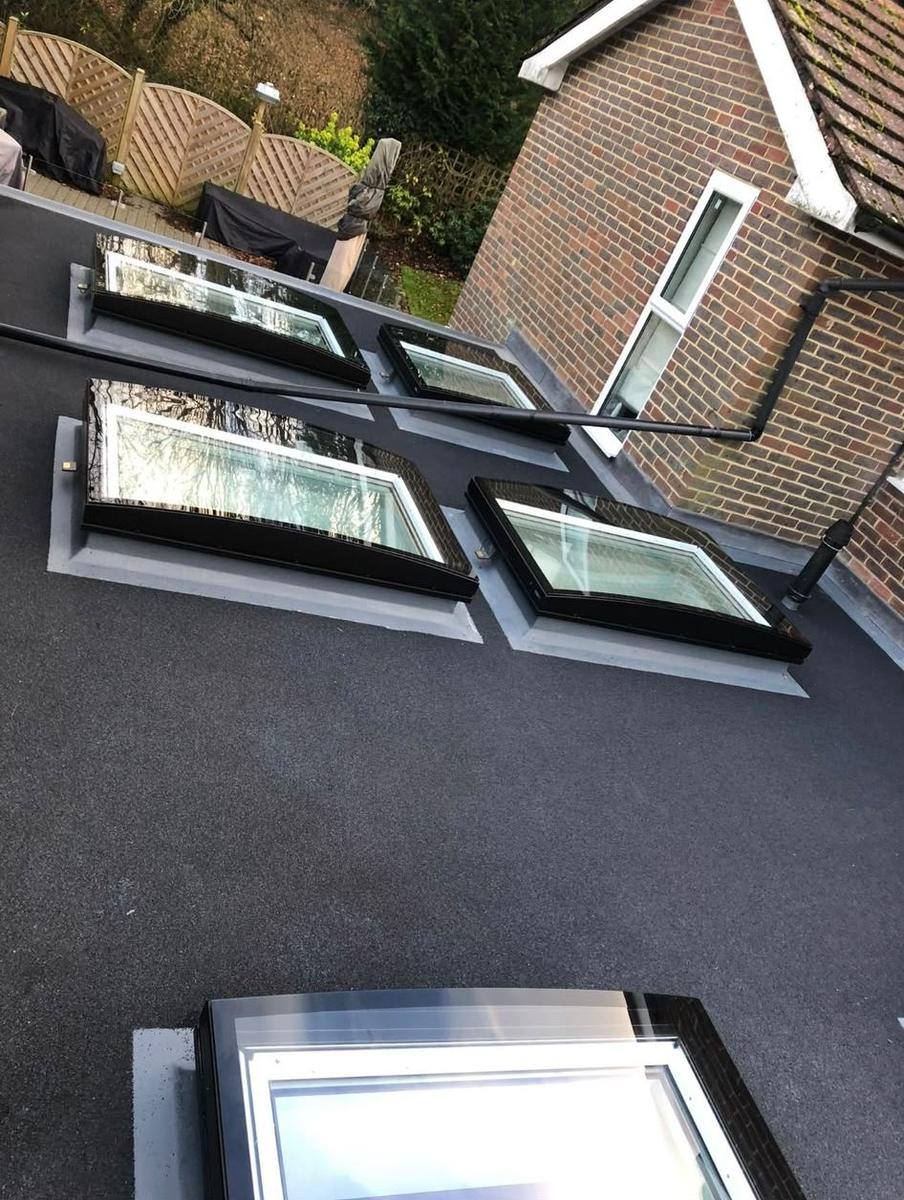
There are several modern flat roofing systems, each with its strengths. Ben will recommend what suits your roof, how it is used and your budget. The finishing details matter as much as the membrane: edge trims, upstands where the roof meets a wall, outlets into the guttering and a properly sealed surround for any rooflights or lanterns.
Signs your flat roof needs attention
- Puddles that sit on the roof for days after rain
- Blisters, bubbles, splits or cracks in the surface
- Moss, plants or a build-up of debris on the roof
- Water coming into the extension or garage, or stains on the ceiling
- A soft or spongy feel underfoot, which suggests a wet deck
- Edges that have lifted or rotted, or rooflights that leak around the frame
How Ben approaches it
Not every leaking flat roof needs replacing. A localised split or a failed upstand can sometimes be repaired, and Ben will tell you when that is the sensible option. One Google reviewer, Malcolm, describes flat-roof and chimney repairs carried out with advanced products and being kept informed at every stage.
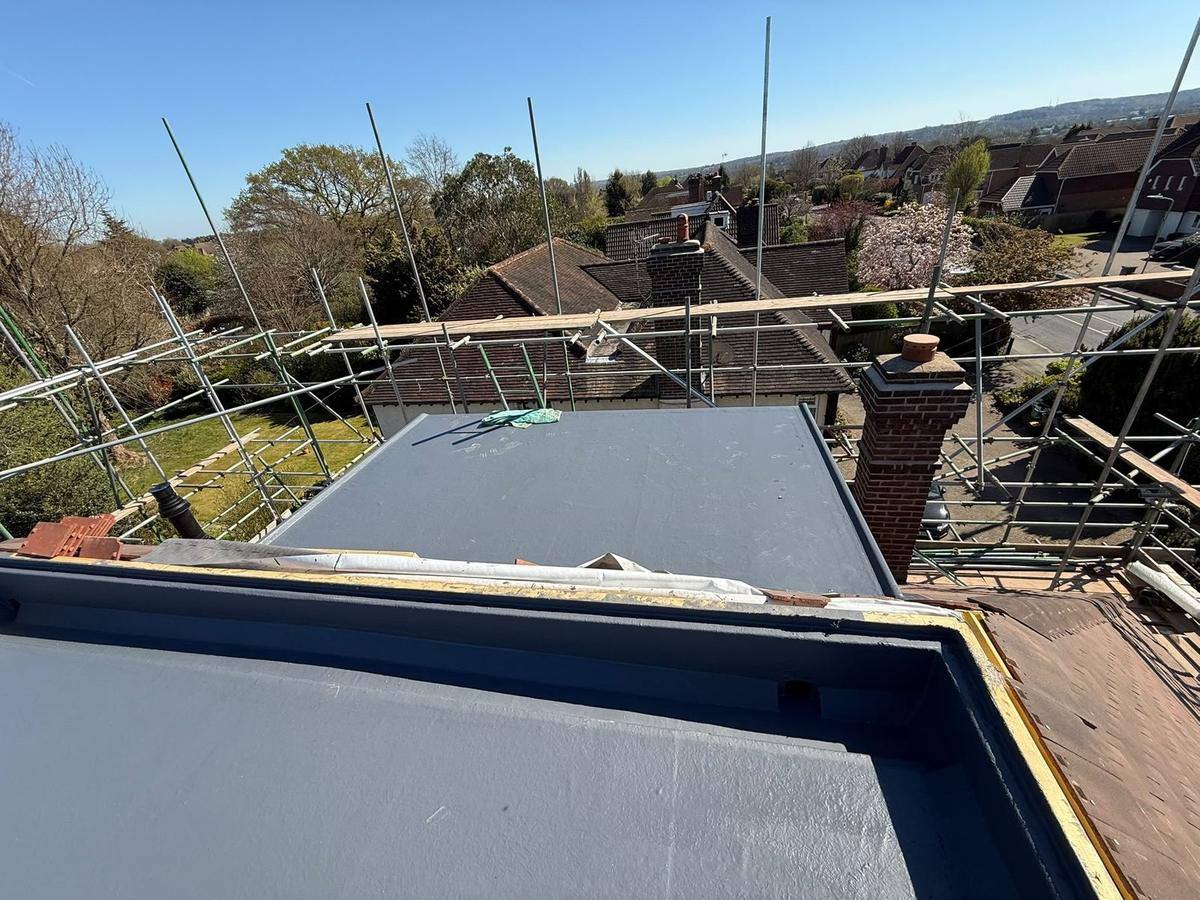
Where the roof has reached the end of its life, you get a clear quote for a full replacement, a tidy site while the work is done, and a finished roof with neat trims that looks as good from the bedroom window as it performs in the rain. Where a flat roof meets a wall, lead flashing or a properly formed upstand keeps the joint watertight.