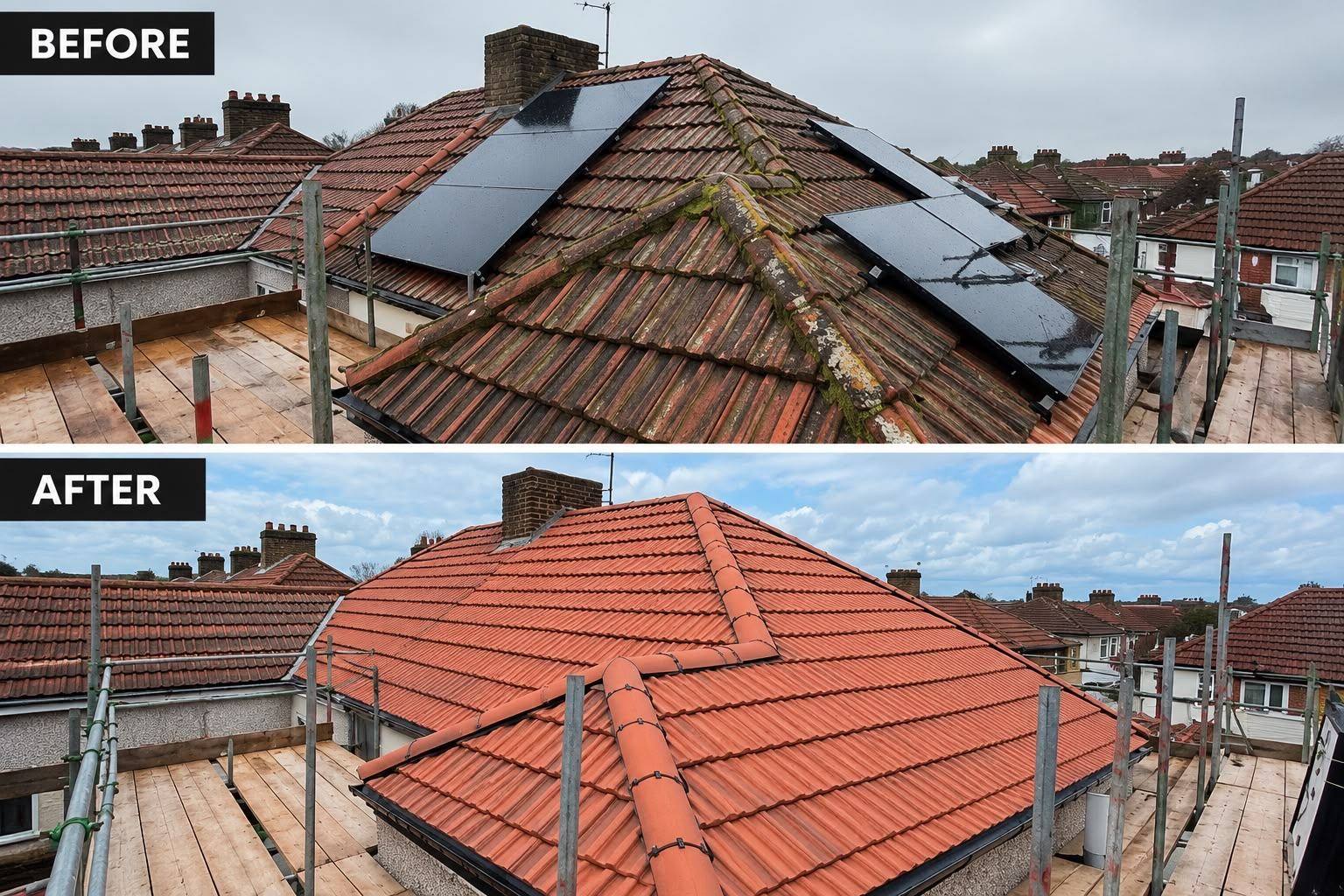
What a re-roof involves
A re-roof takes the existing covering back to the rafters and builds it up again properly. On a typical pitched roof that means putting up scaffolding, stripping the old tiles or slates and battens, and checking the timbers underneath while they are exposed. A new breathable membrane goes on, followed by new battens and the finished covering, whether that is slate, clay tile or concrete tile.
The details are what make a roof last: ridges, hips, valleys and verges finished neatly, lead work renewed where it is needed, and ventilation designed in so the loft stays dry. With the scaffold already up, it is often sensible to replace fascias, soffits and guttering at the same time.
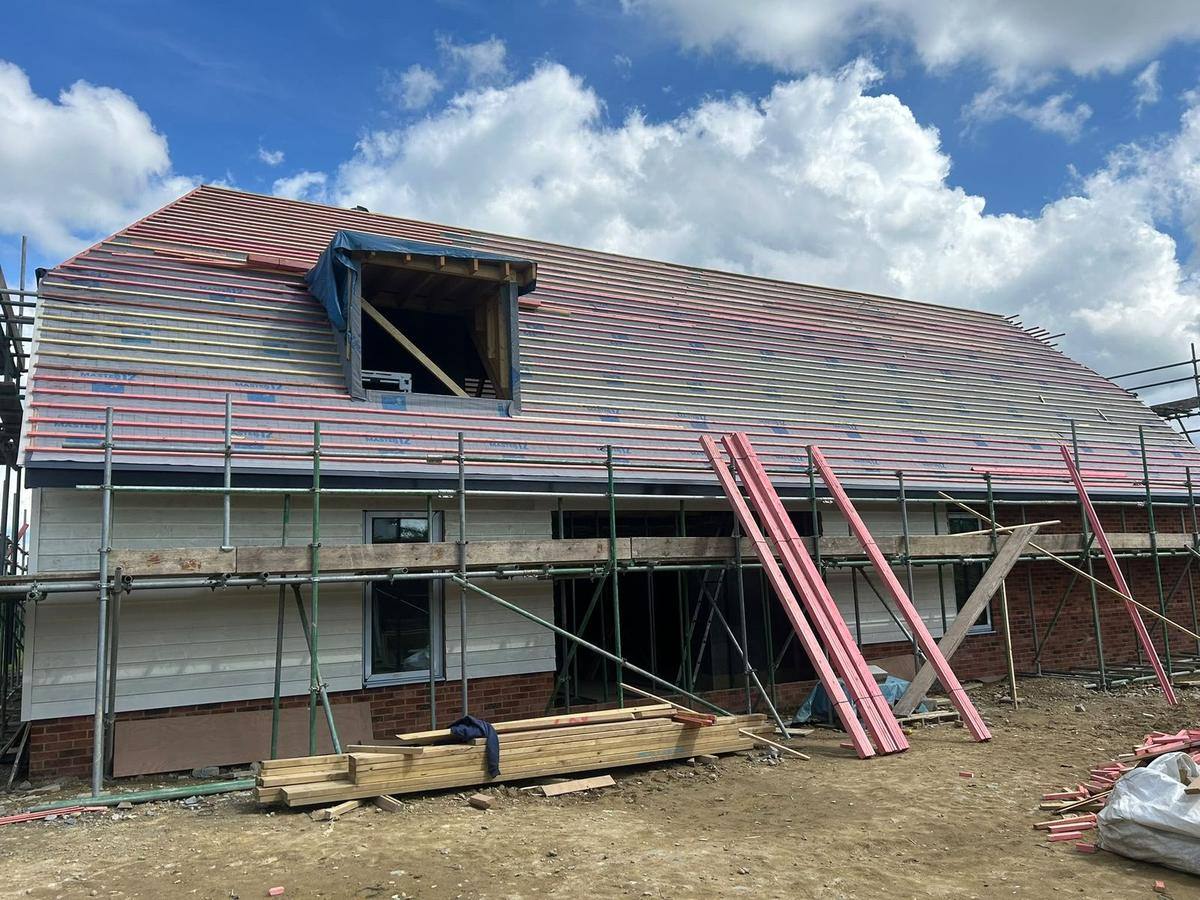
Signs you might need a new roof
- Leaks that keep coming back in different places, or repairs that don’t hold
- Lots of slipped, cracked or flaking tiles or slates across the roof
- A roof line that sags or dips between the rafters
- Daylight showing in the loft, or old underfelt that has torn or perished
- Slates sliding out because the original nails have rusted through
- Crumbling ridge and hip mortar and heavy moss over the whole roof
How Ben approaches it
A new roof is a big decision, so it starts with an honest survey. Ben gets up to look at the roof, takes photos of what he finds and talks you through whether a full re-roof is really needed, or whether a targeted repair will do the job for now. If replacement is the right call, you get a clear, free quote setting out what is included, so there are no surprises later.
You can talk through tile or slate options that suit the house and the street, agree dates that work for you, and expect to be kept up to date as the job progresses. When the roof is finished, the site is cleared and Ben walks you through the completed work.