
What lead work involves
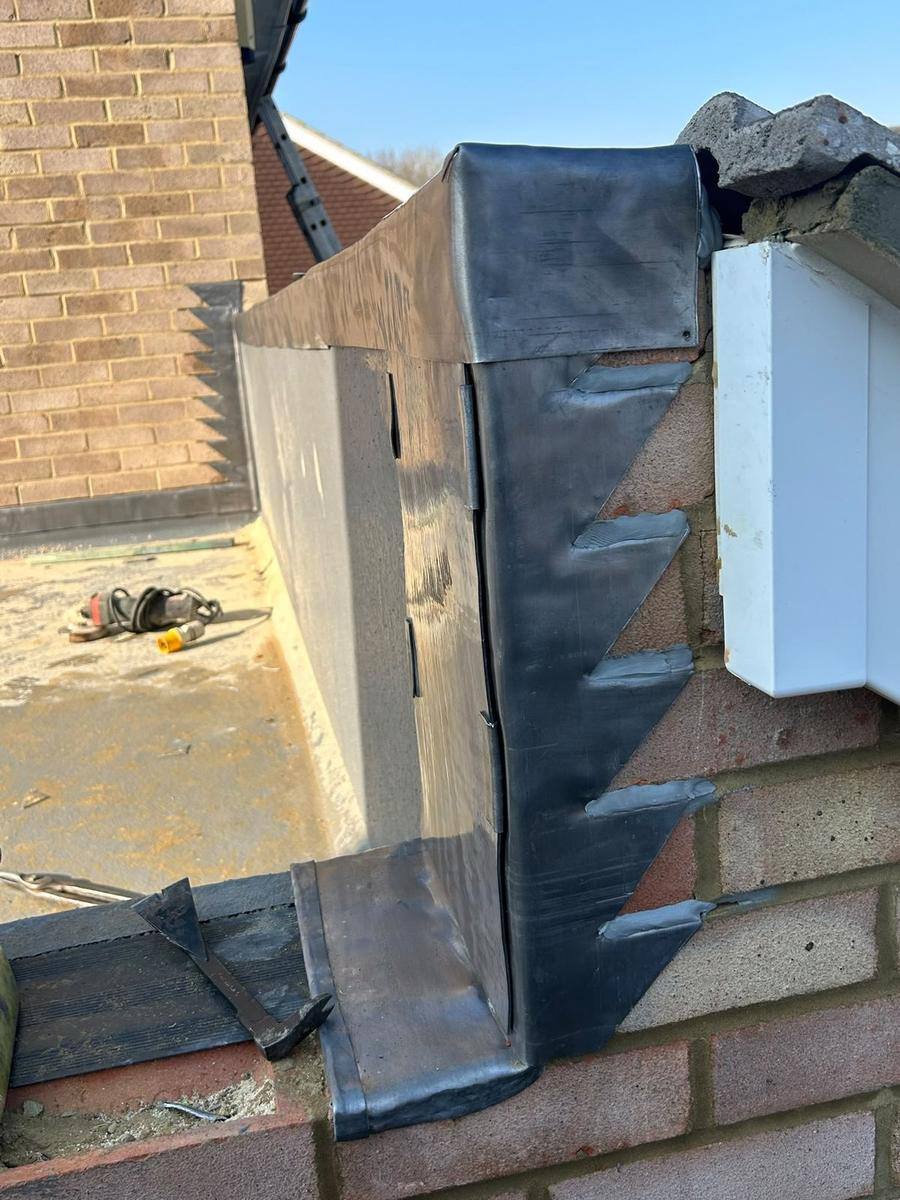
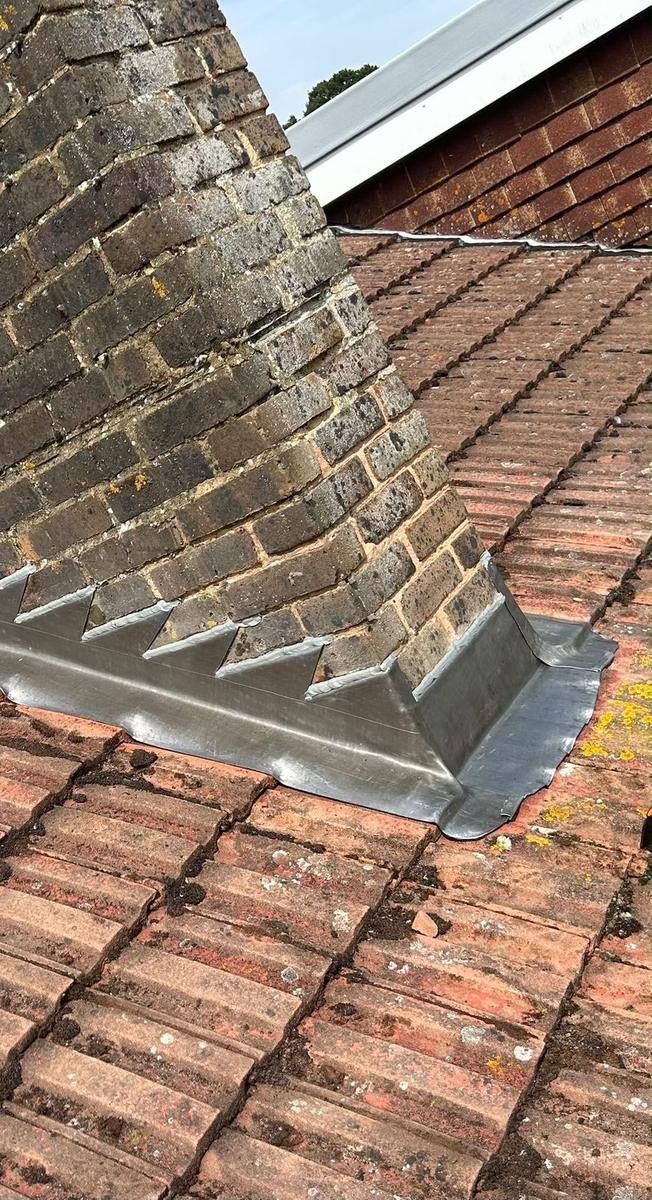
Wherever a roof meets a wall, a chimney, a dormer or another roof slope, there is a joint that tiles or slates alone cannot seal. That is the job of lead: stepped and cover flashings chased into the brickwork, soakers under the tiles, aprons and back gutters around chimneys, valleys where two slopes meet, and the cheeks and tops of dormers.
Good lead work is about the details. Each piece is cut to a sensible length so it can expand and contract without splitting, dressed tight to the shape of the roof, fixed with clips where needed and pointed into the mortar joints so water runs over it, not behind it.
Signs your lead work has failed
- Damp on a chimney breast or where a ceiling meets an outside wall
- Lead that has lifted, split or come away from the brickwork
- Mortar pointing above the flashing that has cracked or fallen out
- Old repairs made with sealant or self-adhesive tape instead of lead
- Water stains on ceilings below a valley
- Missing lead, which is sometimes taken from roofs by thieves
How Ben approaches it
Leaks around flashings are often blamed on the tiles, so the first job is tracing where the water is actually getting in. Ben will take photos, show you the problem and explain whether the existing lead can be re-dressed and re-pointed or whether it needs replacing.
Where lead needs renewing, it is replaced properly rather than patched over with mastic, which tends to fail again within a few seasons. Lead work is part of most chimney repairs, re-roofs and flat roofs where they meet a wall, so it is often done alongside other work while access is in place.